Moving heavy furniture is one of the most dangerous aspects of moving house. One wrong move can mean weeks of back pain, a trip to A&E, or permanent damage to your belongings and property. This guide covers everything you need to know to move furniture safely - whether you're doing it yourself or deciding when to call in professionals.
Furniture Weight Chart
Understanding how much things actually weigh helps you plan properly. Here's what you're dealing with:
Living Room
Bedroom
Appliances
Specialist Items (Hire Professionals)
Common Moving Injuries & Prevention
Back Strain
The most common injury. Caused by lifting with your back instead of legs, twisting while carrying, or trying to lift too much.
Prevention: Lift with your legs, keep back straight, never twist
Herniated Disc
More serious than strain. Can cause shooting pain down legs. Often requires months of recovery or surgery.
Prevention: Don't lift items beyond your capability
Hernia
Inguinal hernias (70% of all hernias) happen when abdominal wall weakens under strain. Requires surgery to fix.
Prevention: Strengthen core, use proper form, don't hold breath
Muscle Tears
Cold muscles tear more easily. Common in shoulders, arms, and back from sudden or repetitive heavy lifting.
Prevention: Warm up for 10-15 mins before heavy lifting
Injury Prevention Checklist
Proper Lifting Technique
The 6-Step Safe Lift
Stand Close with Feet Apart
Position yourself as close to the item as possible. Feet shoulder-width apart for a stable base.
Bend at the Knees, NOT the Waist
Squat down by bending your knees. Keep your back straight and chest up. Your legs should do the work.
Get a Firm Grip
Use your whole hand, not just fingers. If there are no handles, grip from underneath or use lifting straps.
Lift Smoothly Using Your Legs
Push up through your heels. Keep the item close to your body - arms extended = much more strain on your back.
Move with Your Feet, Never Twist
To change direction, turn your whole body by moving your feet. Twisting your torso while holding weight is how backs get injured.
Set Down by Bending Knees Again
Don't just drop items or lean over. Squat down and place carefully. Reverse the lift process.
Two-Person Lift Technique
- Communicate constantly - One person calls "lift", "stop", "down", etc.
- Match heights where possible - Similar heights make carrying easier
- Carry high and low - For tall items, one person carries the top, one the bottom
- Lift at the same time - Count "1, 2, 3, lift" to coordinate
- Walk in sync - Person at the front walks backwards and directs
Before You Move: Preparation Steps
1. Plan Your Route
Walk the path from start to finish. Identify tight corners, narrow doorways, and stairs. Look for obstacles like rugs, cables, or toys that could trip you.
2. Measure Everything
Measure your furniture AND all doorways, hallways, and stairwells. Write down the measurements. Nothing worse than getting a sofa stuck halfway through a door.
3. Clear the Path
Remove rugs, mats, and floor cables. Move small furniture and decorations out of the way. Open all doors fully and secure them.
4. Disassemble What You Can
Remove furniture legs, take out drawers, detach headboards, remove wardrobe doors and shelves. Take photos before disassembly. Put all screws and bolts in labelled bags.
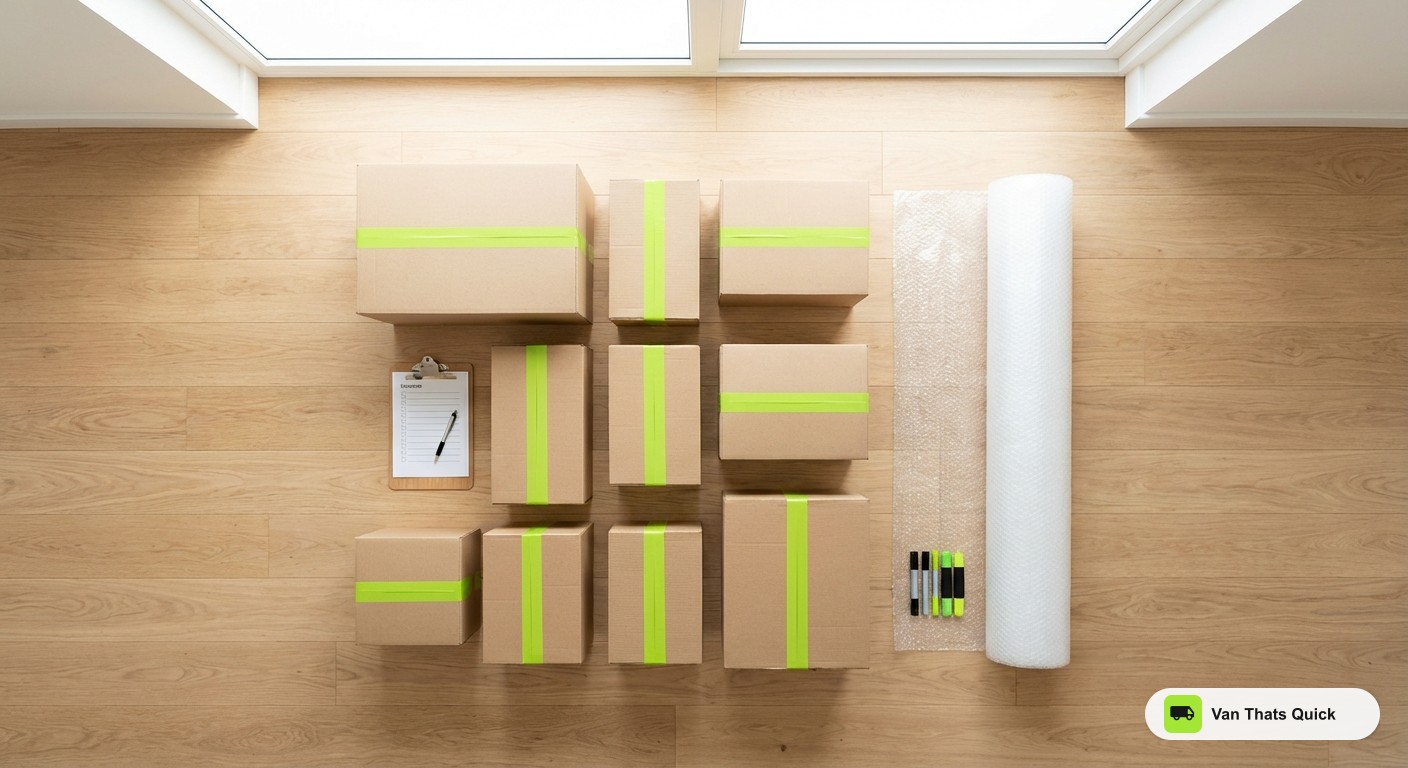
5. Protect Everything
Wrap furniture in moving blankets or old sheets. Use bubble wrap for glass and mirrors. Protect floors with cardboard or dust sheets along the route.
6. Remove Doors if Needed
Removing a door gives you an extra 2 inches of clearance. Pop out hinge pins with a hammer and screwdriver from below. Takes 2 minutes and can save hours of struggling.
Essential Moving Equipment
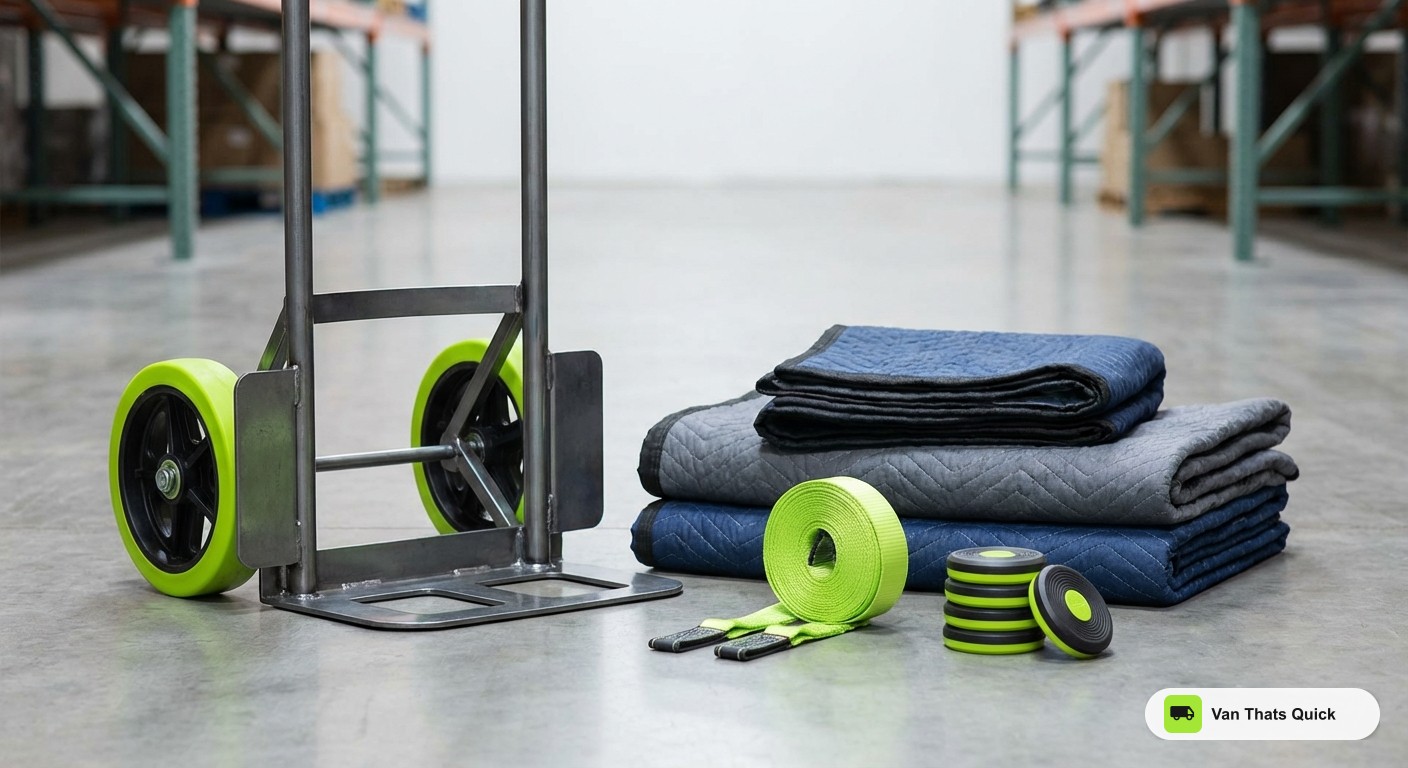
Furniture Sliders
£5-15 for a pack
Plastic or felt discs that go under furniture legs, letting you slide rather than lift heavy items across floors.
Best for: Sofas, beds, wardrobes, heavy dressers
Shoulder Dolly / Lifting Straps
£20-40 to buy
Strap system that transfers weight to your legs and frees up your hands. Can handle items up to 350kg with two people.
Best for: Fridges, washing machines, heavy wardrobes
4-Wheel Furniture Dolly
£10-20/day hire
Flat platform on wheels. Load furniture on top and roll it wherever you need. Can handle 200-600kg depending on model.
Best for: Flat surfaces, warehouses, loading vans
Appliance Dolly / Hand Truck
£15-25/day hire
L-shaped with two wheels, plus straps to secure items. Tilt back and wheel appliances along. Capacity typically 200-300kg.
Best for: Fridges, washing machines, filing cabinets
Stair-Climbing Dolly
£30-50/day hire (manual)
Special wheels or tracks designed to climb stairs. Manual versions need effort but manageable. Powered versions handle extreme weights.
Best for: Flats above ground floor, any stair moves
Moving Blankets
£5-15 each to buy
Thick padded blankets to wrap furniture. Prevents scratches, dings, and damage during transport. Secure with stretch wrap or tape.
Best for: All furniture, especially wood and leather
Budget DIY Alternatives
For Hard Floors
- • Old towels (folded, soft side down)
- • Carpet offcuts (carpet side down)
- • Aluminium foil (2-3 layers around legs)
For Carpet
- • Thick cardboard (double layered)
- • Plastic container lids
- • Frisbees or baking sheets
Moving on Different Floor Types
Hardwood & Laminate
- Use felt or soft-padded sliders - hard plastic will scratch
- Lay cardboard sheets along the route for protection
- Clean floors first - grit causes scratches
- Never drag furniture without protection
Carpet
- Use hard plastic sliders or thick cardboard
- Rock furniture to slide cardboard under legs
- Pull rather than push on thick carpet
- Don't use soft materials - they'll bunch up
Tile & Vinyl
- Felt sliders work best on smooth tile
- Protect grout lines from heavy furniture
- Watch for uneven tiles that could tip dollies
- Don't drop heavy items - tiles crack easily
Concrete (Garages)
- Dollies work brilliantly on smooth concrete
- Sweep first - debris will scratch or jam wheels
- Watch for slopes - items can roll away
- Don't use cardboard sliders - too much friction
Item-by-Item Moving Guides
Sofas & Couches
Weight: 40-120kg depending on size and material
Key challenges: Bulky more than heavy. Often too wide for doorways.
Pro Technique
- Remove all cushions and legs/feet first
- Measure your narrowest doorway - many sofas won't fit horizontally
- Stand the sofa on its end (vertically) to move through hallways
- For doorways, use the "hook method": tilt onto back legs, angle through door like an "L" shape, then pivot around the frame
- For L-shaped sofas: they usually come apart - look for connecting bolts underneath
Wardrobes
Weight: 45-100kg empty (solid wood heavier than flatpack)
Key challenges: Top-heavy, fragile backs, often too tall for doorways.
Pro Technique
- Remove everything: doors, shelves, hanging rails, drawers
- Take photos of hinge positions for reassembly
- If flatpack, consider disassembling completely - it'll go back together
- For solid wardrobes, tilt back onto a furniture dolly
- Never carry full wardrobes - the back panels can pop out
- Secure doors with tape or stretch wrap to prevent swinging open
Fridge Freezers
Weight: 60-150kg (American styles are heaviest)
Key challenges: Must stay upright, very heavy, awkward to grip.
Pro Technique
- Empty completely and defrost 24 hours before moving
- Clean thoroughly to prevent mould during transit
- Secure doors with tape or bungee cord
- Use an appliance dolly with straps - essential for fridges
- Keep upright as much as possible during the move
- Important: If tilted more than 45°, let stand upright for 24 hours before plugging in
Warning: Plugging in too soon after tilting can damage the compressor permanently. The oil needs time to settle back into the compressor.
Washing Machines
Weight: 60-90kg (deceptively heavy due to concrete counterweights)
Key challenges: Very heavy for their size, loose drum can cause damage.
Pro Technique
- Run an empty hot wash cycle the night before to clean
- Disconnect water and drain hoses - have towels ready for drips
- Install transit bolts if you have them - they secure the drum and prevent damage
- If no transit bolts, tip machine forward slightly to drain remaining water
- Minimum two people required - use lifting straps or appliance dolly
- Secure hoses to the back with tape so they don't snag
Mattresses
Weight: 15-60kg depending on size and type
Key challenges: Awkward shape, can bend and damage, hard to grip.
Pro Technique
- Cover with a mattress bag or old fitted sheet - keeps clean
- Carry on its side (like walking a plank) - two people each end
- Use handles if present - or make a rope sling through the handles
- Don't bend or fold unless it's a foam mattress designed for it
- In the van, keep flat or on edge against the wall - never pile things on top
Pianos - HIRE SPECIALISTS
Weight: Upright 150-250kg, Grand 300-500kg
Do not attempt to move a piano yourself. Ever.
- They're incredibly heavy and awkwardly balanced
- Internal mechanisms are extremely delicate
- One wrong move can cause thousands in damage
- Specialist piano movers have specific equipment and insurance
- Most man and van services won't touch them
Cost: £150-500 for specialist piano movers depending on distance and stairs.
Moving Heavy Items on Stairs
The Golden Rule
The heaviest end goes UP first when going upstairs. This keeps the centre of gravity low and prevents the item tipping backwards. Going down? Heavy end goes first (which is now the lower end).
Going Up
- • Strongest person at the bottom (carries more weight)
- • Top person guides and backs up the stairs
- • Take one step at a time, pause between steps
- • Rest on landings - don't try to do it all in one go
- • Communicate every step: "Up... up... stop... up..."
Going Down
- • Strongest person at the top (controls the weight)
- • Bottom person walks forward down the stairs
- • Move even slower than going up - gravity works against you
- • Keep weight back on your heels, not leaning forward
- • Use the wall for guidance if needed
Stair-Specific Equipment
Manual Stair Climber (£30-50/day)
Tri-wheel design that rotates up stairs. Needs effort but manageable. Good for washing machines and fridges.
Powered Stair Climber (Hire only via removal companies)
Battery-powered tracks. Can handle up to 680kg. Essential for pianos, safes, and heavy appliances up multiple floors.
DIY Ramp (When possible)
For short runs of 3-4 steps, a sturdy plywood ramp can let you wheel items up. Secure it firmly to prevent slipping.
When to Hire Professionals
A trip to A&E, time off work, or a damaged item will cost more than hiring help. Here's when to call in the pros:
Always Hire For:
- Pianos (any type)
- Gun safes
- Pool tables with slate beds
- Hot tubs
- Antiques worth £1000+
Strongly Recommended:
- Items 50kg+ going up/down stairs
- American fridge freezers
- Large sofas up narrow stairwells
- 3rd floor+ flats without lifts
- Moving alone with heavy items
Why Use a Man and Van Service?
Equipment
Dollies, straps, blankets, and stair climbers - we bring everything needed.
Experience
We move heavy items daily. We know the tricks to get sofas through tight doorways.
Insurance
Goods in transit insurance protects your belongings. DIY damage is on you.
Equipment Hire in London
If you're doing it yourself, here's where to hire moving equipment across London:
| Company | Equipment | Price (Day) | Delivery |
|---|---|---|---|
| HSS Hire | Appliance trolleys, hand trucks | £15-25 | Same day available |
| Herts Tool Co | Heavy duty dollies (up to 1 tonne) | £10-30 | Next day London/Herts |
| City Hire | Trolleys, board trolleys | £8-20 | Next day (order by 4pm) |
| Fat Llama | Peer-to-peer: dollies, hand trucks | From £7 | Pickup/meet owner |
| Wellers Hire | Dolly trucks, furniture movers | £10 + VAT | Collection or delivery |
*Prices approximate and subject to change. Check websites for current rates.
Frequently Asked Questions
What is the safest way to lift heavy furniture?
Stand with feet shoulder-width apart, bend at the knees (not waist), keep your back straight, grip the furniture firmly, lift using your leg muscles, hold close to your body, and take small steps. Never twist while carrying - turn with your feet instead.
How heavy is too heavy to lift alone?
HSE guidelines suggest a maximum of 25kg for men and 16kg for women for regular lifting. For a one-off move, you might manage up to 30-35kg, but anything heavier requires a second person. Items over 50kg that need to go up or down stairs should be handled by professionals with proper equipment.
Can I move a washing machine by myself?
It's not recommended. Washing machines weigh 60-90kg and are awkward to grip. You need at least two people, preferably using lifting straps or an appliance dolly. If you have transit bolts, install them to secure the drum. Never try to carry a washing machine down stairs alone.
What can I use instead of furniture sliders?
For hard floors: old towels, rugs (soft side down), or aluminium foil wrapped around furniture legs. For carpet: thick cardboard (double layered), plastic container lids, frisbees, or baking sheets. Cut to size and place under each leg.
How do you move heavy furniture up stairs?
Always keep the heaviest end going up first. The stronger person stands lower on the stairs to support more weight. Move slowly, communicate clearly with your partner, and take breaks on landings. For very heavy items, use a stair-climbing dolly or hire professionals with powered equipment.
Should I disassemble furniture before moving?
Yes, whenever possible. Remove legs from sofas and tables, take out drawers from dressers (reduces weight significantly), remove doors and shelves from wardrobes, and take off headboards from beds. Take photos before disassembly and keep all screws in labelled bags.
Where can I hire moving equipment in London?
You can rent furniture dollies from HSS, Herts Tool Co, and City Hire from around £5-10 per day. Fat Llama offers peer-to-peer rental of moving equipment from £7/day. Most companies offer same-day or next-day delivery across London.
What items should I never move myself?
Pianos (150-500kg), gun safes, pool tables (slate beds weigh 200-400kg), hot tubs, items over 50kg going up multiple flights of stairs, and valuable antiques that need insurance coverage. These require specialist equipment and trained professionals.
Need Help Moving Heavy Furniture?
We've got the equipment, experience, and insurance. Get a free quote in minutes.